
Interview
Dmitrii Zenkov
Director of Save New Year!
We would like to express our sincere gratitude to the director Dmitrii for taking the time to answer our questions.
Whole team of Liverpool Indie Awards is wishing you the very best in all your future projects. We hope to see more of your exceptional work in the years to come. Thank you once again!
Can you tell us about your submitted project and what inspired you to create it?
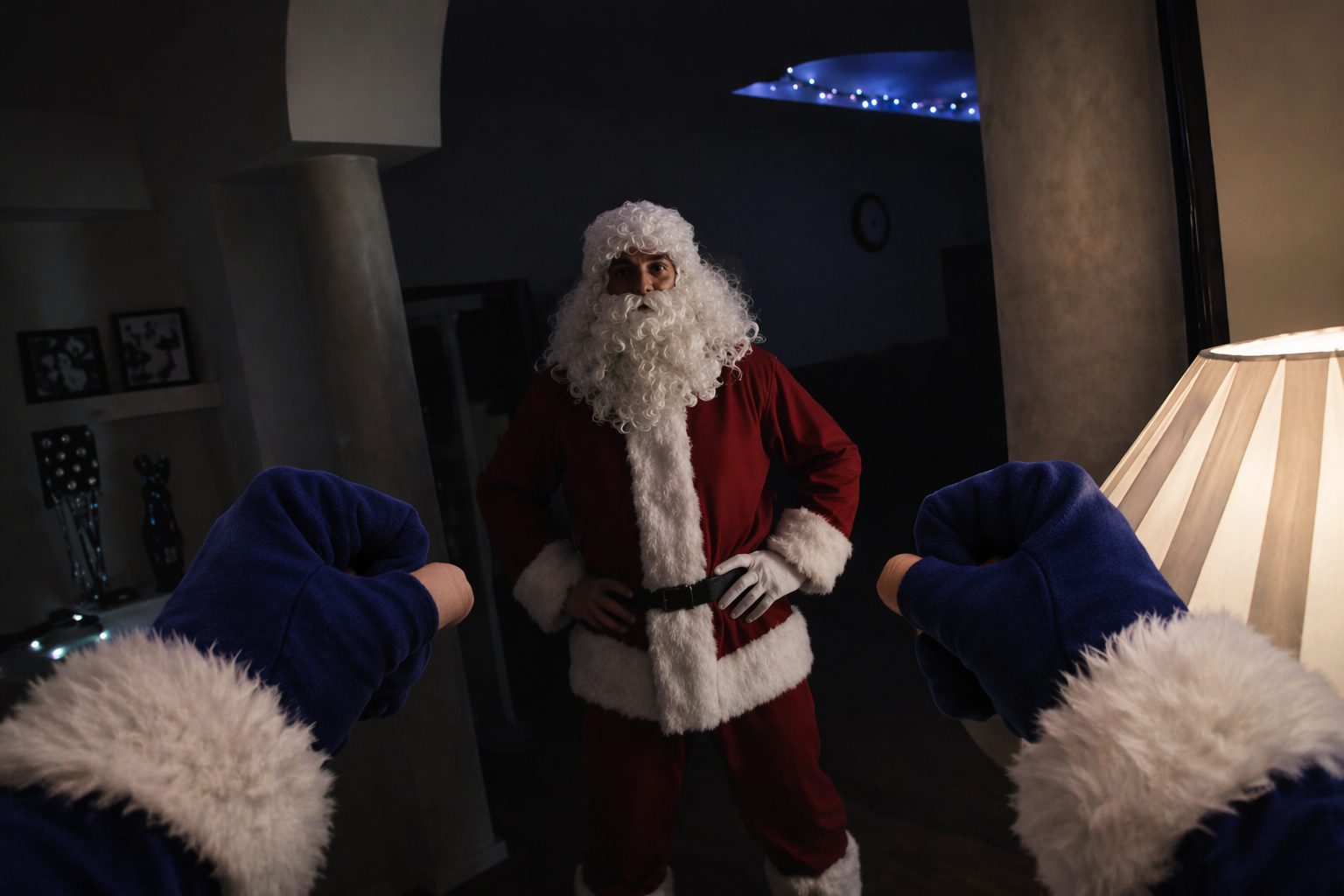
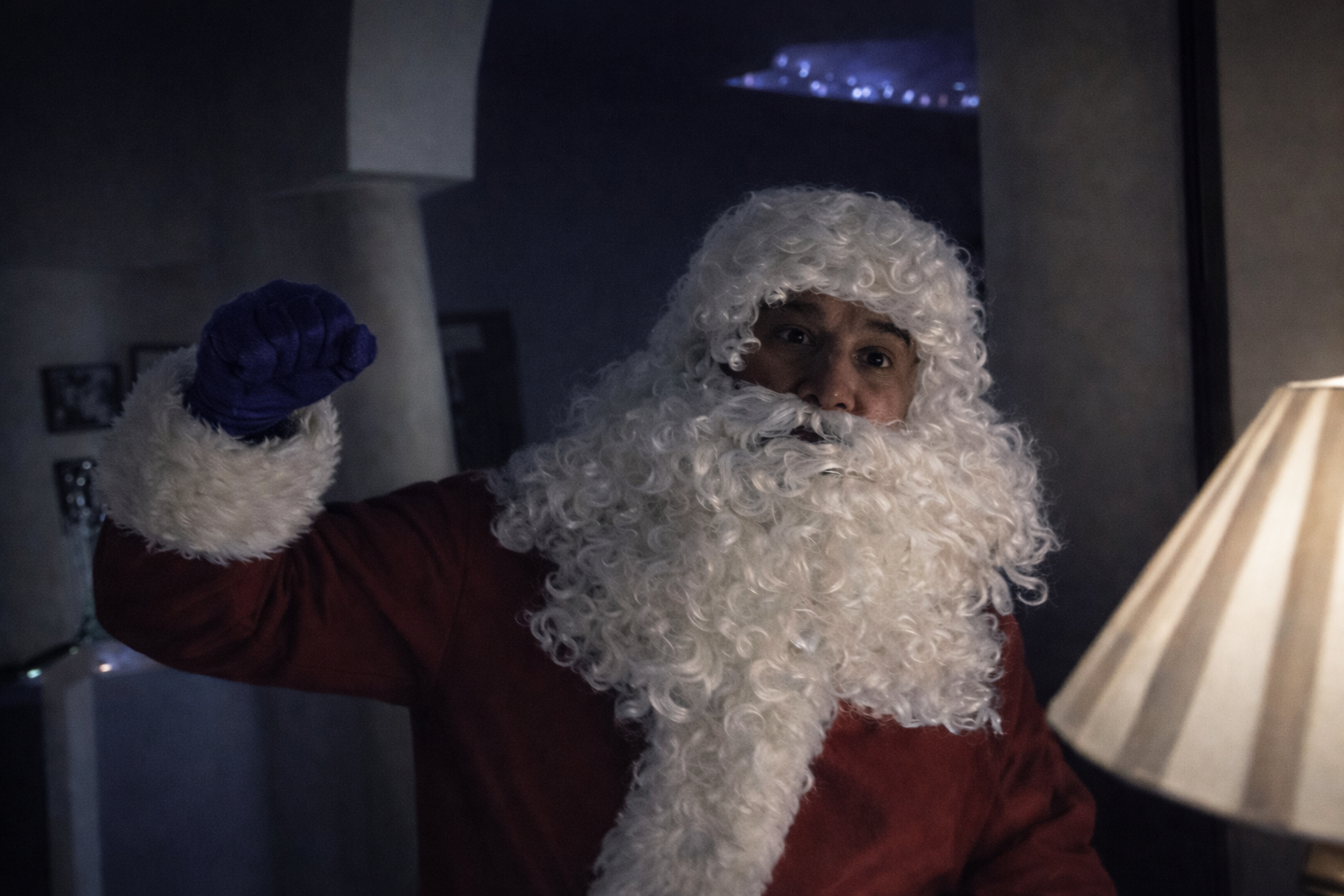
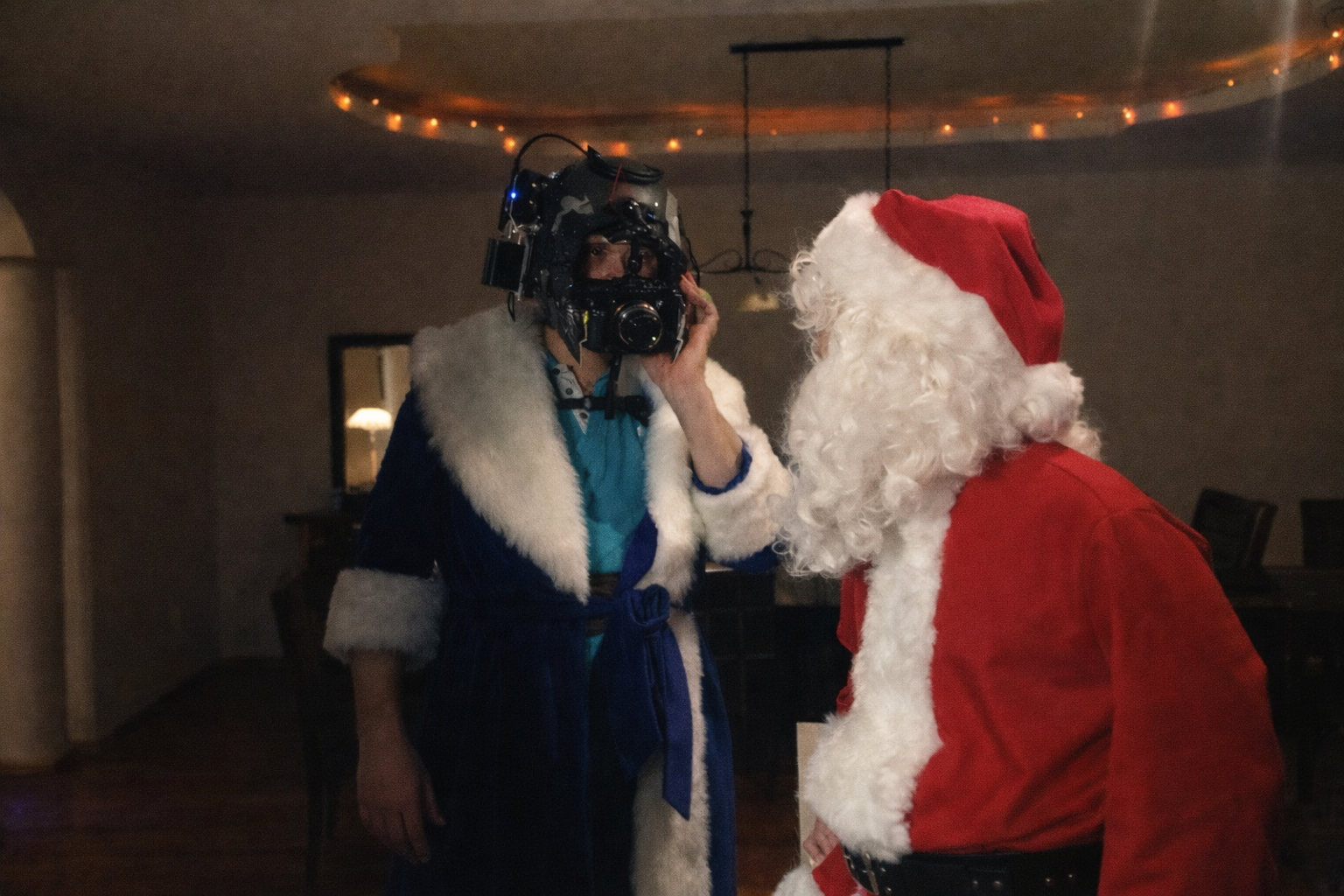
The project I submitted is a trailer for an interactive YouTube film that I had the opportunity to develop several years ago. It really tells a first-person, high-stakes action story—much like you might see in a film such as Hardcore Henry—where one Santa Claus finds himself needing to protect a family from another.
While it certainly appears to be a high-energy genre experiment on the surface, for me, it truly represented a deep dive into interactive storytelling as a distinct digital art form. My intention was to transition the viewer from merely passively observing to experiencing an "embodied" sensation—essentially placing them directly within the narrative itself. The inspiration for this came from blending the world of cinema with gaming logic and that unique "presence" often found in theater. It was, in essence, a very practical exploration of what I now refer to as interdisciplinary directing—seeking out that sweet spot where various mediums naturally intersect. This work also provided a foundational basis for my subsequent research into neuroscience and the ways in which we perceive short-form video content. Even back then, I was really focused on questions like: how quickly can a viewer orient themselves within a scene, and what specific elements work to keep their attention from wavering?
What was your creative vision for this project, and how did you work to bring that vision to life?
My primary goal was to truly transform the viewer from being just a simple observer into an active participant. I really wanted the entire experience to feel immediate and intensely physical, giving you the sensation of actually being right there, rather than just watching something from a distance.
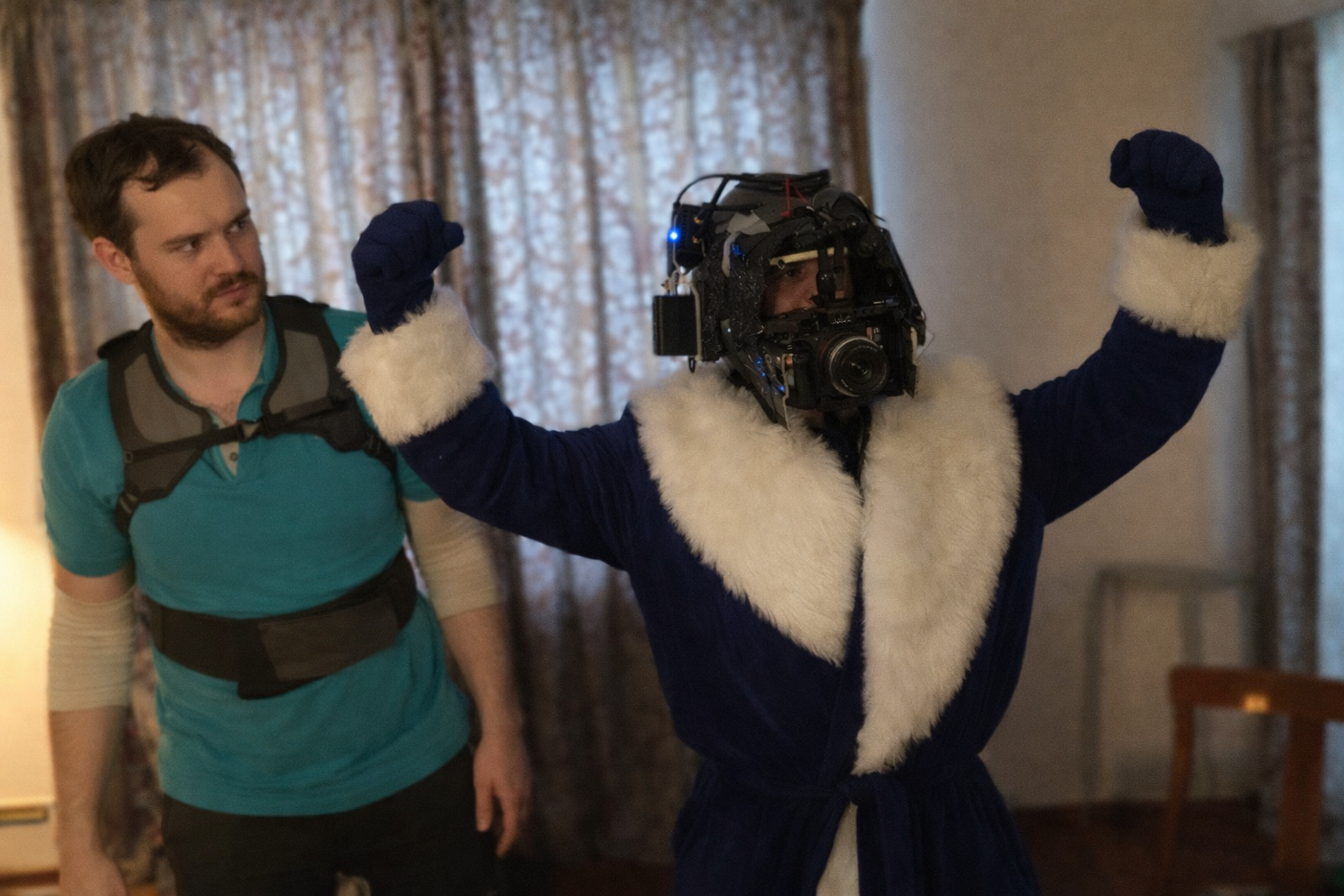
To achieve this, I chose a first-person perspective as my main creative tool, which, of course, meant setting aside the traditional directing handbook. The camera, in this context, essentially became the viewer’s "body." This meant that every single movement and gesture within the film had to directly support that illusion. I specifically directed the actors to interact with the camera as if it were a real person, and this approach certainly added a raw intensity to their performances. It stands as an early illustration of my overall approach: utilizing digital tools in a conscious way to shape the human experience.
How did you collaborate with the rest of your team, such as producers, writers, and cinematographers, to ensure the project's success?
For me, collaboration isn't just about people getting along; it’s actually a carefully considered system designed to safeguard both the artistic endeavor and the individuals who are creating it. I'm a firm believer in the principles of "lean management" and fostering sustainable workflows.
Given my clinical background, I consistently find myself considering the team’s overall well-being and how workload balance impacts everyone. In the context of fast-paced productions, it’s incredibly easy for people to experience burnout, but, ultimately, that only harms the quality of the final product. For this particular project, we implemented production "sprints" to maintain a consistent and manageable rhythm. Our partners at Big Bag Films were truly wonderful to work with—they fully embraced this structured approach,
which, in turn, transformed what could have easily been a chaotic shoot into a smooth and genuinely creative process. I firmly believe that leadership involves taking responsibility for the team’s environment, not solely for the "artistic vision."
What were some of the biggest challenges you faced during the production, and how did you overcome them?
The technical aspects of this project presented a considerable hurdle. At that time, first-person filmmaking was still somewhat of an unknown territory, meaning there weren't many readily available camera rigs designed to achieve a truly accurate eye-level perspective.
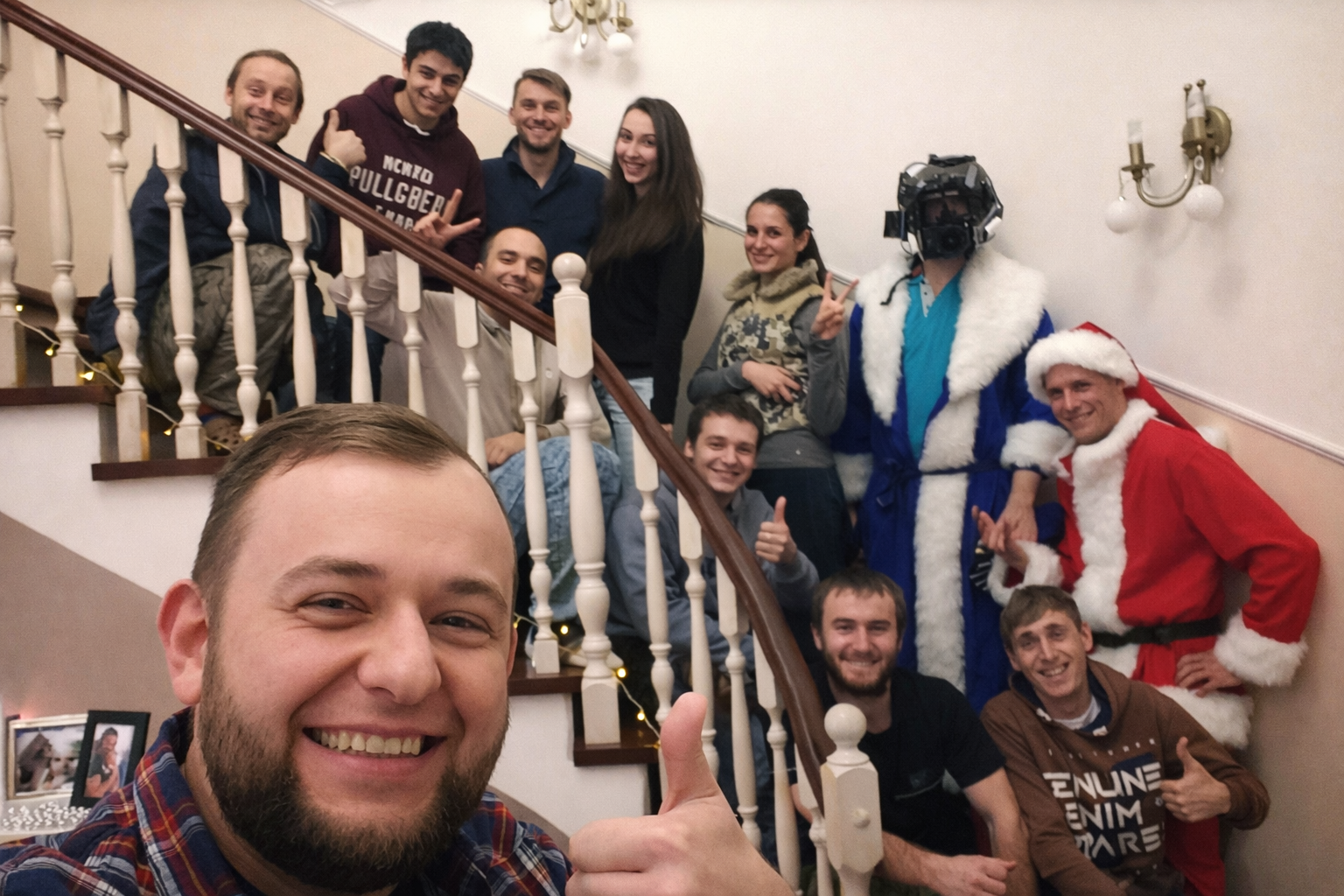
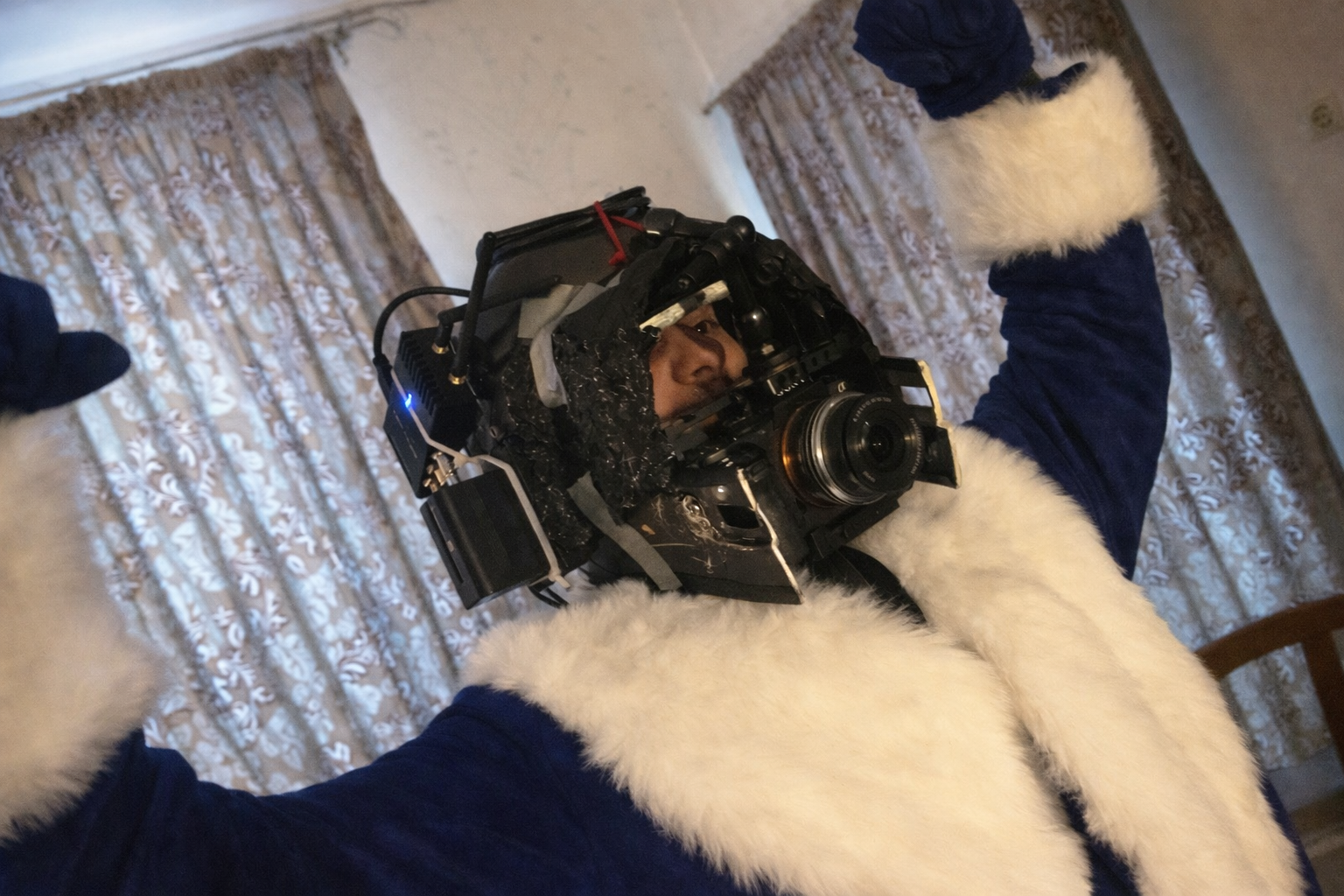
Consequently, we engaged in quite a bit of "mad scientist" experimenting, eventually building custom setups—which included things like mounting cameras onto modified motorcycle helmets. It was a lengthy process involving a lot of trial and error to truly determine what felt most natural and authentic to the human eye. Another significant challenge was the acting itself. The lead actor wasn't simply performing for the camera; he literally had to embody the camera. This required us to retrain his movement patterns so that every gesture he made felt like a completely natural reaction. It offered a truly fascinating insight into how performance dynamically shifts within a subjective digital space.
Which specific moments or scenes are you particularly proud of, and why?
I’m particularly proud of the interactive elements. Those specific "branching" scenes where the viewer is tasked with deciding what action to take next. That’s really where the entire project comes alive.
My co-author, Ivan Us, and I dedicated a significant amount of time to meticulously mapping these out, much like one would construct a narrative tree. I drew inspiration from the work of Telltale Games, but my goal was to explore how that particular logic would translate and feel within a cinematic environment. In a traditional movie, the protagonist typically carries the moral weight of the story; however, in this project, the "conscience" of the character is effectively shifted onto the viewer. It ceases to be just a story; it transforms into a system where your choices and your perception become entirely interconnected.
Looking back, is there anything you would have done differently, and what lessons did you learn from this experience?
I place a lot of emphasis on "retrospectives". Taking the time to look back and genuinely assess what truly worked and what didn't. However, I make a conscious effort to be disciplined and avoid what I call "creative overthinking." The past, in my view, is a finished structure that primarily serves to inform the future.
Nevertheless, if I possessed a time machine, I would likely make a few adjustments to the opening scene. My aim would be to make it even more immediately immersive from the very first second, with the intention of drawing the viewer in much faster. In interactive work, that initial "entry point" is absolutely crucial—it effectively sets the tone for the entirety of the experience.
Can you describe a project that you are particularly proud of and why it stands out to you?
I have been involved in a project I developed in Belgrade called Phys-drama, which includes an artistic performance based on texts written by Daniel Hans.
It really represents the purest expression of my "care-based" directing methodology. The project actually originated as a direct response to a very real-world crisis: many Slavic-speaking artists in Serbia were forced migrants who had unfortunately lost their creative communities and, with that, their sense of stability. Instead of solely focusing on the "output" of a performance, I found myself asking: What specific needs do these actors have to feel safe enough to truly create again? We consciously utilized slow-tempo techniques to help reduce any emotional overload. It was, in a sense, directing—using the power of art to help restore a person’s capacity to act and function effectively. It’s truly more than just a performance; it’s a space where art, neuroscience, and social support converge.
What advice would you give to aspiring directors looking to break into the industry?
My advice might seem a bit unconventional: Don’t begin by pursuing directing right away.
Instead, I suggest you first gain experience in another profession. Accumulate some genuine "real-world" experience. My clinical background, for example, shaped my approach to directing far more profoundly than any film school ever could have. Directing, at its core, is fundamentally about working with people, and to do that effectively, you truly need to draw from a life that exists outside the realm of art. Consider treating directing much like engineering. It’s a craft that you can effectively break down into distinct components: attention, timing, and perception. Finally, always show respect for the viewer’s time. In this digital age, if you don't capture their attention within the first few seconds, they will inevitably move on. Be precise in your approach, avoid over-explaining, and always treat the audience's attention as your most valuable resource.
How did you approach working with actors to bring out the performances you wanted for the project?
Everything genuinely resides within your actor-partner. I don’t ask actors to simply "feel" an emotion. The neuroscience theory of constructed emotion tells us that emotions are not extracted as pre-existing entities, but are constructed by the brain in the moment based on context, the body, and interaction. I provide actors with short active verbs—specific intentions such as "to protect," "to provoke," or "to convince." This approach gives them something concrete and actionable to do. When an actor directs their focus outward, toward their partner, rather than inward on their own performance, that inherent tension often dissipates, and the scene truly comes alive. My ultimate aim is to create the precise conditions where a performance emerges naturally, rather than attempting to "extract" it from the actor through sheer force.
How did you approach sound design and music for the project, and what was your collaboration like with your composer or sound designer?
Sound is never an afterthought; it’s actually a primary directing tool. If you’re working with a tight budget, prioritize spending it on sound. Audiences are often quite forgiving of a slightly fuzzy image, but they almost never forgive bad audio.
I strategically use sound design to effectively guide the viewer’s attention and precisely control the level of tension. I also take into account the "human" aspect of audio. Many individuals are quite sensitive to aggressive sounds, especially those who experience anxiety or have sensory sensitivities. I make a conscious effort to design sound as a "responsible interface" between the creative work and the viewer’s nervous system. It’s all an integral part of understanding and working with human perception. So - let’s know your brain and mental first!
How did you handle feedback or criticism from your team or audience, and what changes did you make as a result?
Receiving feedback can certainly feel uncomfortable, but deliberately avoiding it is truly a dead end. If you stop listening to what others have to say, you inevitably stop growing.
I tend to view feedback through the lens of "Social Baseline Theory." Essentially, this theory suggests that the human brain expends more effort when it’s operating in isolation. When you work entirely by yourself, you often waste valuable energy on self-doubt and excessive analysis. Feedback, conversely, allows you to effectively "distribute" that mental load. I make a conscious effort to separate the notes I receive from my personal ego. If a viewer has a particular reaction, it indicates that something within the system is either working as intended or perhaps not. My job isn't to defend my original idea—it’s to genuinely understand the response and then use that insight to refine and sharpen the final work.
From the film
Your project could be the next one here
Enter your film or screenplay and compete in the categories you choose.