
Interview
Sandra Isabel Correia
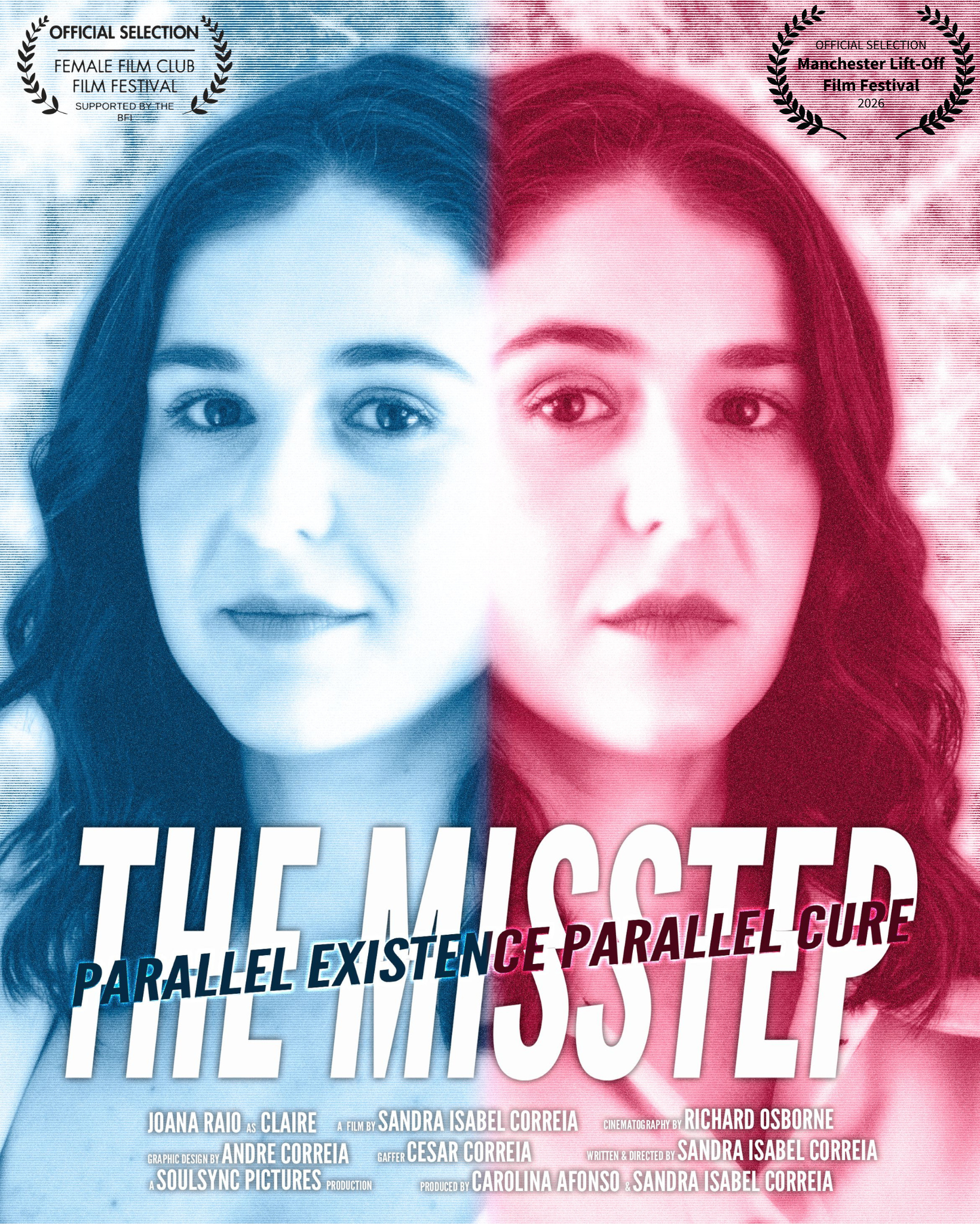
Director of The Misstep
We would like to express our sincere gratitude to the director Sandra Isabel for taking the time to answer our questions.
Whole team of Liverpool Indie Awards is wishing you the very best in all your future projects. We hope to see more of your exceptional work in the years to come. Thank you once again!
Can you tell us about your submitted project and what inspired you to create it?
The Misstep is a surreal psychological thriller that serves as a visceral exploration of the ADHD mind. This project is particularly significant to me as it marks my debut as a writer-director. I was inspired by the desire to move beyond the "clichés" of neurodivergence. Instead of explaining ADHD from the outside, I wanted to plunge the audience into the internal experience—where a simple distraction can spiral into a high-stakes nightmare, but at the same time, a journey toward healing. I’ve always been fascinated by how our minds can reshape reality, and I wanted to see if I could tell a deeply personal story for my first film using the language of suspense to explore a parallel existence and a parallel cure in a cinematic way.
What was your creative vision for this project, and how did you work to bring that vision to life?
How did you collaborate with the rest of your team, such as producers, writers, and cinematographers, to ensure the project's success?
As the writer-director, I had the advantage of hand-picking my entire team, which allowed for a very unified creative shorthand from day one. I was incredibly supported by my producer, Carolina Afonso, whose collaboration was instrumental in navigating the complexities of this production. We were a small group (8 in total) but comprised of incredible professionals who were deeply committed to the vision. Interestingly, one of our biggest anchors for success was our food producer; having high-quality catering was essential for maintaining morale and energy, especially since we had to push through a grueling 15-hour shoot day. That sense of care behind the scenes allowed the crew to stay focused on making the internal world of the film feel external and visceral.
What were some of the biggest challenges you faced during the production, and how did you overcome them?
Our biggest challenge was definitely the budget and time. Due to our limited resources and equipment rental constraints, we only had a single shooting day to capture a complex, surreal narrative. We overcame this through meticulous planning, agility, and of course, because of the amazing crew that stood by the vision. We shot across three different locations, with the apartment being the most significant challenge; for every single scene within that space, we had to stop, strike the equipment, reset the lights, and move to the next setup, repeating this grueling process for every room and sequence. When things didn't work exactly as planned, we leaned into the "misstep" of it all, using the environment's natural grit to enhance the film's tension.
Can you discuss any specific moments or scenes in the project that you are particularly proud of, and why?
I am particularly proud of the "apartment entry" sequence until the white room. It’s the pivot point of the film where a mundane mistake becomes a surreal trap. The pacing in those scenes had to be perfect, just slow enough to be unsettling, but fast enough to feel like a rabbit hole. Seeing the tension hold in the edit was a very rewarding moment for me, and that success was largely due to my amazing cast and DP who executed the vision with such precision.
Looking back, is there anything you would have done differently, and what lessons did you learn from this experience?
I think every director looks back and wishes they had "one more hour" for a specific shot! However, the lesson I learned was the power of trust. I learned that when you trust your actors and your crew with the emotional intent of the scene, they often bring ideas to the table that are better than what was originally on the page.
Can you describe a project that you are particularly proud of and why it stands out to you?
What advice would you give to aspiring directors looking to break into the industry?
How did you approach working with actors to bring out the performances you wanted for the project?
How did you approach sound design and music for the project, and what was your collaboration like with your composer or sound designer?
Sound is 50% of the experience in a thriller, especially one about the mind. I wanted the soundscape to be hyper-focused, magnifying small noises to create anxiety. My DP, Richard Osborne, and I handled the post-production ourselves; he managed the sound design while I selected the music. Our collaboration was centered on finding that "uncomfortable" frequency that mirrors the protagonist's state of mind. The music isn't just a score; it’s an extension of the protagonist’s heartbeat and thoughts.
How did you handle feedback or criticism from your team or audience, and what changes did you make as a result?
From the film
Your project could be the next one here
Enter your film or screenplay and compete in the categories you choose.