ScreenplayUnited States
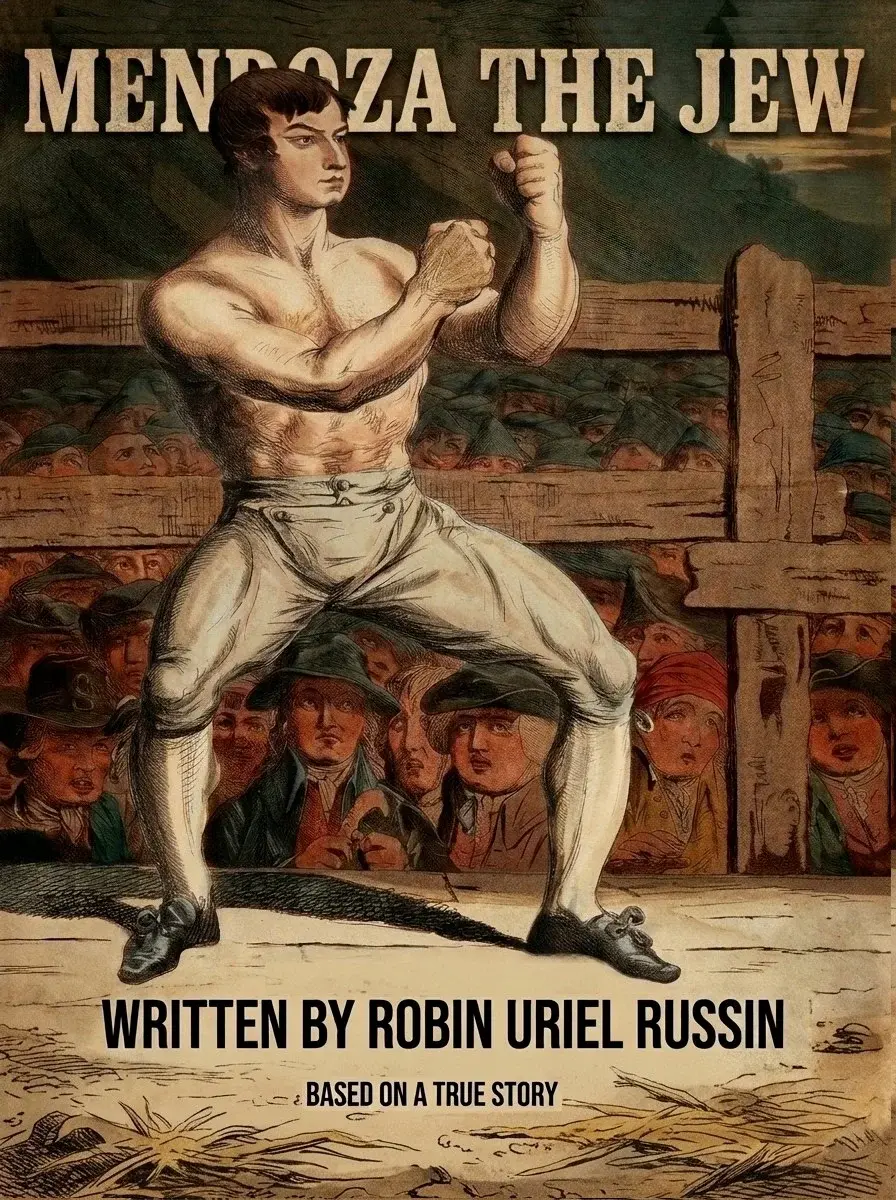
Mendoza the Jew
Written by Robin Russin
1782: When “Gentleman Richard Humphreys," boxing coach to the Prince of Wales, spots a Jewish boy dominating a street fight against a bigger man in a rough London ghetto, one of the great boxing rivalries in history is born. Young Daniel Mendoza becomes first Humphreys' protege and then bitter adversary, rising to be the first Jewish boxing champion of England, an underdog who fights as “Mendoza the Jew,” but his people know him as their hero.
The project
Daniel Mendoza was the first Jewish boxing champion of England, an underdog in both size and social stature who fought as “Mendoza the Jew.” At five foot seven inches and 160 pounds, he was the lightest heavyweight championship in history. This is at a time--the late 18th century--when he and other Jews have been confined to the poor Whitechapel area of London’s East End. -------------------------------------------------------------------------------------------------------------------------------- Born to a Sephardic Jewish family, Mendoza grows up tough, but his pugnaciousness worries his family, who like all Jews at the time want to keep a low profile and avoid the wrath of the barely-tolerant Christian majority.
But as a teenager, while working in a teashop, he gets into a fight with a big brawler of a porter who had threatened his employer. A crowd gathers as Mendoza easily beats up the much larger man.
Richard Humphreys, who happens to be passing by, is impressed. Known as "The Gentleman Boxer" and boxing trainer to the aristocracy--the Prince of Wales is a fan of the still illegal sport--Humphreys is so taken by Mendoza's spirit and ability that he offers to second him in the fight, and then to train him and be in Mendoza’s corner as a professional fighter.
Meanwhile, young Mendoza falls in love with Esther, a beautiful neighborhood girl, who adores him but only wishes he’d stop fighting and become a peaceful businessman like his father. Mendoza can’t seem to stay out of trouble, though, nearly getting arrested for a prank during the carnival-like celebration of Purim, and for engaging in smuggling for a brief time in order to raise money.
In spite of his family’s wishes, Mendoza is born to fight. He trains with Humphreys, and his first professional opponent--and first victory--is Harry the Coal-heaver, lasting 40 rounds and winning Mendoza five guineas. While Esther and his parents are upset that he continues to fight, the other Jews in his neighborhood are thrilled, and give him the nickname "The Lion of Israel." His instant fame--and Humphreys’ intercession--brings him the patronage of the Prince of Wales himself.
Despite his new career as a fighter, Mendoza still works at a variety of jobs to make a living--because he spends his winnings almost as fast as he earns them. But each job is temporary, as he keeps getting into scrapes with customers, and refuses to back down from an insult or a challenge.
Mendoza begins an uninterrupted string of victories. With each one, his esteem rises in his community--and his fame across all of Great Britain. After one fight, a crowded of jubilant supporters carries torches and sings “See The Conquering Hero” all the way home.
As his star rises, he begins to outshine his mentor, Humphreys, and starts his own boxing academy, drawing both Jewish and Gentile students. He begins work on “The Art of Boxing,” the first truly scientific approach to fighting, including techniques of speed and defense previously unpracticed by other boxers. Newly rich, he marries Esther and wants to give her the best of everything...meaning that again he spends more than he has. But they are happy together, and she becomes pregnant. Now he has a family to worry about.
Humphreys becomes jealous of his former pupil, stops training him, forcing Mendoza to train with a rough former boxer who moonlights as a bouncer at a brothel. Humphreys then demands a fight with him to prove who is the true expert. This launches one of the greatest rivalries in sports history, a series of three fights that electrifies the public. Taunting each other in letters published by the popular newspapers, their first fight seems to go Mendoza’s way--until one of Humphreys’ seconds interrupts the action just as it looks like Humphreys is about to be knocked out (all fights had seconds in the ring along with three referees). Upset and put off his game, Mendoza suffers a vicious kidney shot that takes him to the ground.
Mendoza has to take time to recover, all the while suffering from Humphreys’ barrage of public insults and Esther’s pleas that he quit fighting. Furious at the humiliation, when he’s finally well, Mendoza agrees to a second match with Humphreys. Public demand and enthusiasm is intense, and they have to find a meeting place both large enough and secret enough to put off the authorities while still drawing a crowd--with a record purse at stake. And this time, he beats Humphreys handily. He returns to his academy a champion, and his business thrives, as he keeps teaching and giving public exhibitions of the sports.
However, bitter at his loss, Humphreys and his associates accuse Mendoza of cheating, and Humphreys demands a third match to settle the score once and for all--and the public, enthralled by the rivalry, demands it as well. A third match is arranged, even bigger and richer than ever before, and the story becomes front page news, eclipsing the news of the French Revolution which has just begun with the storming of the Bastille. Mendoza again destroys Humphreys in the fight of the century, a victory no one can contest. He becomes the true hero of his people, raising their image among the general public.
And Mendoza becomes the first Jew in England to meet with the king himself, who is reluctant at first, but then pleased to have a champion to celebrate after the humiliation of the recent war with the Colonies.
About the writer
Robin Uriel Russin has written, produced and directed for film, TV and the theater, including Warner Bros.’ "On Deadly Ground;" "America’s Most Wanted" on Fox; and "Vital Signs" on ABC. His his original one-hour series about King David, "Beloved," was adapted by ABC as "Of Kings and Prophets." He directed the independent feature film, "When I Sing," co-starring Chris Mulkey, and an independent feature about the humor and challenges of disability, "The Anxiety of Laughing." Another feature he co-wrote, "2 Hearts," starring Jacob Elordi and Radha Mitchell, had a wide theatrical release in 2020, and streams on Netflix. He is currently working on "The Rescuers: The Mystery of Goodness," a documentary series about the “Righteous Among the Nations,” the diplomats recognized for saving refugees during the Holocaust. Robin has won or been a finalist for numerous awards for screenwriting and directing. In theatre, his play, "Painted Eggs," was reviewed by The Los Angeles Times as "ambitious, heart-felt and hypnotic," and his play, "The Face in the Reeds," had an extended four-month run at the Ruskin Group Theatre in LA. He has also written dozens of short plays, and directed numerous stage productions. Robin is co-author with William Missouri Downs of the books "Naked Playwriting" and "Screenplay: Writing the Picture," both in their second editions. Robin a professor of dramatic writing and Chair of the Department of Theatre, Film & Digital Production at UC Riverside. Robin has degrees from Harvard, Oxford, and UCLA. He is a Rhodes Scholar and member of Phi Beta Kappa and the Writers Guild of America.